Where ABA Meets Neuropsychology
Behavior analysts already understand that behavior is shaped by context, learning history, reinforcement, motivation, skill deficits, and the environment. These trainings build on that foundation by adding another clinically useful layer: how neuropsychological systems influence learning, regulation, assessment interpretation, and treatment response.
This on-demand webinar series was created for BCBAs who want to deepen their clinical decision-making by integrating ABA principles with neuropsychological insight. The goal is to help BCBAs better understand how differences in executive functioning, memory, attention, language, sensory processing, emotional regulation, social perception, and motor control may affect behavior, skill acquisition, generalization, and treatment outcomes.
Across these trainings, participants examine autism, ADHD, Tourette syndrome, executive dysfunction, memory impairment, emotional dysregulation, stimming, sensory differences, assessment findings, and other neurodevelopmental profiles through a practical ABA lens. Each course connects neuropsychological concepts directly to treatment planning, functional assessment, skill acquisition, reinforcement systems, prompting, antecedent strategies, replacement skills, parent training, generalization, and clinical troubleshooting.
Where ABA Meets Neuropsychology
Behavior analysts already understand that behavior is shaped by context, learning history, reinforcement, motivation, skill deficits, and the environment. These trainings build on that foundation by adding another clinically useful layer: how neuropsychological systems influence learning, regulation, assessment interpretation, and treatment response.
This on-demand webinar series was created for BCBAs who want to deepen their clinical decision-making by integrating ABA principles with neuropsychological insight. The goal is to help BCBAs better understand how differences in executive functioning, memory, attention, language, sensory processing, emotional regulation, social perception, and motor control may affect behavior, skill acquisition, generalization, and treatment outcomes.
Across these trainings, participants examine autism, ADHD, Tourette syndrome, executive dysfunction, memory impairment, emotional dysregulation, stimming, sensory differences, assessment findings, and other neurodevelopmental profiles through a practical ABA lens. Each course connects neuropsychological concepts directly to treatment planning, functional assessment, skill acquisition, reinforcement systems, prompting, antecedent strategies, replacement skills, parent training, generalization, and clinical troubleshooting.
A core theme of the series is helping BCBAs move toward a broader clinical question: “What conditions make this behavior, learning difficulty, or treatment barrier more likely to occur?” For some learners, executive demands, weak working memory, slow processing speed, sensory-motor regulation needs, anxiety, language limitations, cognitive rigidity, or difficulty with emotional regulation may affect how they respond to ABA intervention. These variables are familiar in a general sense, but understanding them more deeply can help BCBAs design programming that is more precise, individualized, and clinically effective.
For example, a learner may appear to avoid a task because it is difficult or nonpreferred, but closer analysis may show that the task places unusually high demands on visual scanning, motor planning, postural control, and sustained attention at the same time. A worksheet, imitation sequence, toileting routine, handwriting task, or table-based instructional program may require more than the target skill itself. When the BCBA understands the sensory-motor and executive demands embedded in the task, programming can be adjusted by changing response format, reducing unnecessary motor load, altering positioning, breaking down visual demands, using more precise prompting, and reinforcing the actual target response rather than inadvertently measuring the learner’s ability to tolerate the whole task context.
Another learner may acquire a skill in one teaching format but struggle when the materials, wording, person, or setting changes. From a neuropsychological perspective, this may reflect difficulty with cognitive flexibility, shifting, or abstraction, not simply a failure to master the skill. ABA programming can then deliberately build flexibility through multiple-exemplar teaching, varied stimuli, programmed changes in wording and materials, tolerance for uncertainty, and generalization across people, settings, and response forms.
A third learner may know the replacement response but be unable to access it when arousal increases. The issue may not be lack of skill acquisition alone, but a breakdown in the learner’s ability to inhibit an immediate response, shift away from a sensory or emotional state, retrieve the taught response, and organize behavior quickly enough in the moment. In that case, treatment may need to include practice under gradually varied conditions, response inhibition training, coping routines, visual or gestural cues, tolerance-building, and reinforcement for early regulation responses before escalation reaches the point where the learner can no longer use the skill.
Sensory processing is also addressed beyond the general idea of “sensory overload.” For some learners, the relevant issue may be difficulty integrating multiple streams of information at once, such as listening to an instruction while filtering classroom noise, visually locating materials, monitoring body position, and preparing a motor response. For others, repetitive behavior or stimming may serve a regulatory function that supports predictability, arousal modulation, or attentional control. Understanding these patterns can help BCBAs avoid treating sensory-related behavior as a single category and instead analyze how sensory regulation, automatic reinforcement, executive control, communication demands, and environmental conditions interact.
These webinars also help BCBAs better understand neuropsychological and developmental assessment findings. BCBAs do not need to administer neuropsychological tests to benefit from understanding what assessment tools measure and how findings may inform treatment. When interpreted appropriately, information about attention, inhibition, memory, language, adaptive functioning, sensory processing, executive functioning, and emotional regulation can help clarify why an intervention is working, why progress is slow, or why a learner may need a different instructional approach.
This series is designed for BCBAs, BCBA-Ds, clinical supervisors, ABA agency leaders, school-based behavior consultants, and advanced practitioners who want to strengthen case conceptualization and improve treatment planning for neurodivergent learners. The focus is practical, clinically relevant, and directly connected to ABA decision-making.
This is advanced continuing education for BCBAs who want to deepen—not replace—their ABA framework by adding neuropsychological tools for understanding the whole learner and improving treatment outcomes.
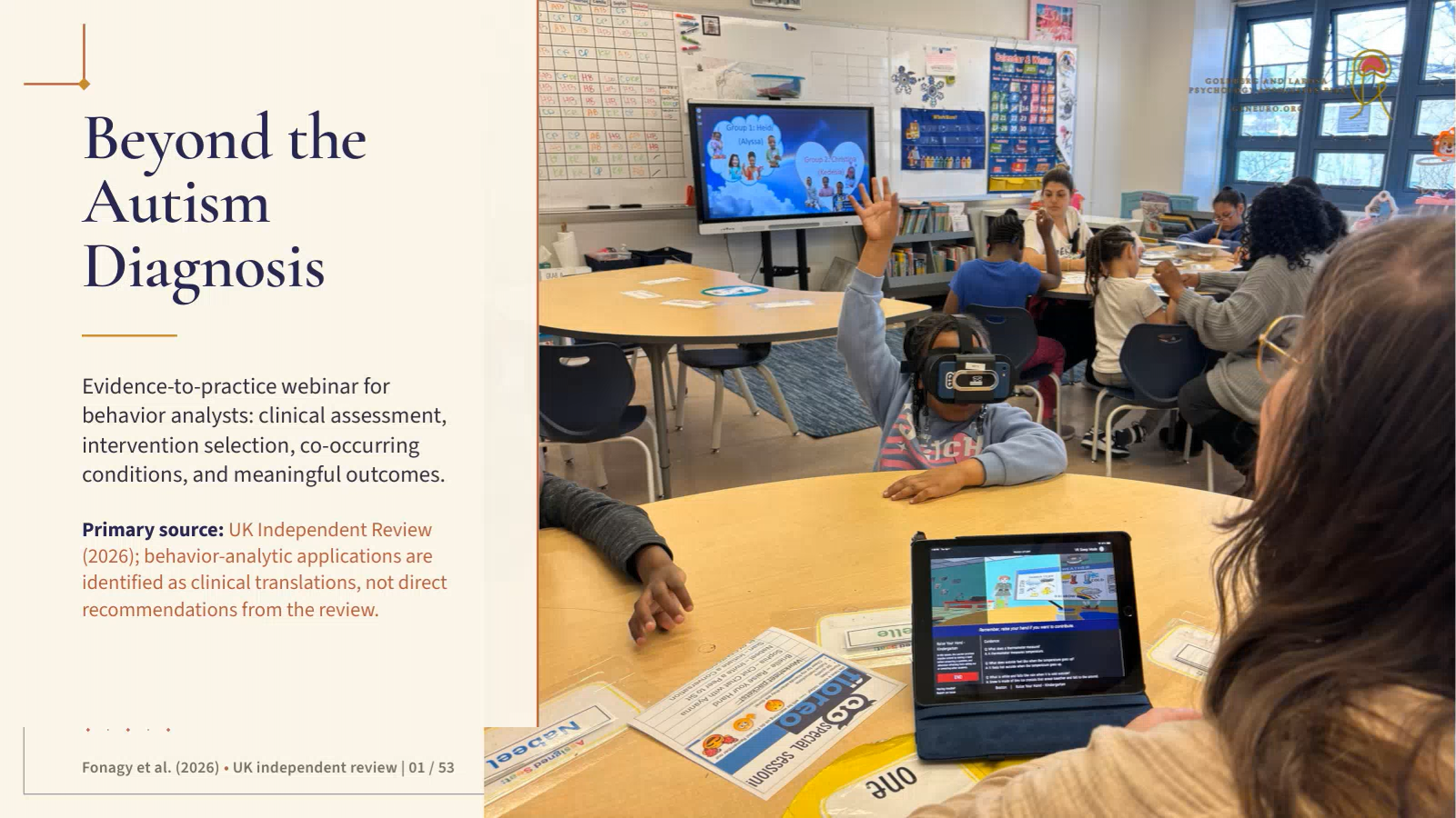
Beyond the Autism Diagnosis: Applying Emerging Evidence on ADHD, Mental Health, and Functional Needs to Behavior-Analytic Practice
Resource Disclaimer and User Responsibility
Goldberg & LaRosa Psychology Associates, PLLC provides these ASD assessment-related resources for educational purposes only. They are intended to support professional learning and discussion and are not clinical advice, diagnostic direction, legal guidance, supervision, or a substitute for independent professional judgment.
Users are responsible for verifying information through appropriate primary sources, including test publishers, manuals, licensing boards, professional organizations, laws, regulations, and ethical standards. Users must apply any information only within their own training, competence, licensure, certification, professional role, and scope of practice.
Mention of any assessment tool, measure, publisher, method, or resource is for educational reference only and does not constitute endorsement, recommendation, authorization, or confirmation that the tool is appropriate for any particular person, setting, or purpose.
Goldberg & LaRosa makes reasonable efforts to provide useful information but does not guarantee that the materials are complete, current, error-free, or suitable for any specific use. Assessment standards, legal requirements, publisher rules, and professional guidelines may change.
Use of these materials is at the user’s own discretion and risk. Goldberg & LaRosa Psychology Associates, PLLC is not responsible for decisions, actions, reports, recommendations, conclusions, or consequences arising from use of or reliance on these materials.
All Goldberg & LaRosa-created materials are protected by copyright and may not be copied, distributed, modified, sold, published, or used for commercial redistribution without written permission. Users must comply with all test security, publisher, licensing, ethical, legal, and intellectual property requirements.
By accessing, downloading, or using these resources, you confirm that you understand and agree to use them lawfully, ethically, and within your professional scope.
Resource Disclaimer and User Responsibility
Goldberg & LaRosa Psychology Associates, PLLC provides these ASD assessment-related resources for educational purposes only. They are intended to support professional learning and discussion and are not clinical advice, diagnostic direction, legal guidance, supervision, or a substitute for independent professional judgment.
Users are responsible for verifying information through appropriate primary sources, including test publishers, manuals, licensing boards, professional organizations, laws, regulations, and ethical standards. Users must apply any information only within their own training, competence, licensure, certification, professional role, and scope of practice.
Mention of any assessment tool, measure, publisher, method, or resource is for educational reference only and does not constitute endorsement, recommendation, authorization, or confirmation that the tool is appropriate for any particular person, setting, or purpose.
Goldberg & LaRosa makes reasonable efforts to provide useful information but does not guarantee that the materials are complete, current, error-free, or suitable for any specific use. Assessment standards, legal requirements, publisher rules, and professional guidelines may change.
Use of these materials is at the user’s own discretion and risk. Goldberg & LaRosa Psychology Associates, PLLC is not responsible for decisions, actions, reports, recommendations, conclusions, or consequences arising from use of or reliance on these materials.
All Goldberg & LaRosa-created materials are protected by copyright and may not be copied, distributed, modified, sold, published, or used for commercial redistribution without written permission. Users must comply with all test security, publisher, licensing, ethical, legal, and intellectual property requirements.
By accessing, downloading, or using these resources, you confirm that you understand and agree to use them lawfully, ethically, and within your professional scope.
Resource Disclaimer and User Responsibility
Goldberg & LaRosa Psychology Associates, PLLC provides these ASD assessment-related resources for educational purposes only. They are intended to support professional learning and discussion and are not clinical advice, diagnostic direction, legal guidance, supervision, or a substitute for independent professional judgment.
Users are responsible for verifying information through appropriate primary sources, including test publishers, manuals, licensing boards, professional organizations, laws, regulations, and ethical standards. Users must apply any information only within their own training, competence, licensure, certification, professional role, and scope of practice.
Mention of any assessment tool, measure, publisher, method, or resource is for educational reference only and does not constitute endorsement, recommendation, authorization, or confirmation that the tool is appropriate for any particular person, setting, or purpose.
Goldberg & LaRosa makes reasonable efforts to provide useful information but does not guarantee that the materials are complete, current, error-free, or suitable for any specific use. Assessment standards, legal requirements, publisher rules, and professional guidelines may change.
Use of these materials is at the user’s own discretion and risk. Goldberg & LaRosa Psychology Associates, PLLC is not responsible for decisions, actions, reports, recommendations, conclusions, or consequences arising from use of or reliance on these materials.
All Goldberg & LaRosa-created materials are protected by copyright and may not be copied, distributed, modified, sold, published, or used for commercial redistribution without written permission. Users must comply with all test security, publisher, licensing, ethical, legal, and intellectual property requirements.
By accessing, downloading, or using these resources, you confirm that you understand and agree to use them lawfully, ethically, and within your professional scope.
Resource Disclaimer and User Responsibility
Goldberg & LaRosa Psychology Associates, PLLC provides these ASD assessment-related resources for educational purposes only. They are intended to support professional learning and discussion and are not clinical advice, diagnostic direction, legal guidance, supervision, or a substitute for independent professional judgment.
Users are responsible for verifying information through appropriate primary sources, including test publishers, manuals, licensing boards, professional organizations, laws, regulations, and ethical standards. Users must apply any information only within their own training, competence, licensure, certification, professional role, and scope of practice.
Mention of any assessment tool, measure, publisher, method, or resource is for educational reference only and does not constitute endorsement, recommendation, authorization, or confirmation that the tool is appropriate for any particular person, setting, or purpose.
Goldberg & LaRosa makes reasonable efforts to provide useful information but does not guarantee that the materials are complete, current, error-free, or suitable for any specific use. Assessment standards, legal requirements, publisher rules, and professional guidelines may change.
Use of these materials is at the user’s own discretion and risk. Goldberg & LaRosa Psychology Associates, PLLC is not responsible for decisions, actions, reports, recommendations, conclusions, or consequences arising from use of or reliance on these materials.
All Goldberg & LaRosa-created materials are protected by copyright and may not be copied, distributed, modified, sold, published, or used for commercial redistribution without written permission. Users must comply with all test security, publisher, licensing, ethical, legal, and intellectual property requirements.
By accessing, downloading, or using these resources, you confirm that you understand and agree to use them lawfully, ethically, and within your professional scope.
Resource Disclaimer and User Responsibility
Goldberg & LaRosa Psychology Associates, PLLC provides these ASD assessment-related resources for educational purposes only. They are intended to support professional learning and discussion and are not clinical advice, diagnostic direction, legal guidance, supervision, or a substitute for independent professional judgment.
Users are responsible for verifying information through appropriate primary sources, including test publishers, manuals, licensing boards, professional organizations, laws, regulations, and ethical standards. Users must apply any information only within their own training, competence, licensure, certification, professional role, and scope of practice.
Mention of any assessment tool, measure, publisher, method, or resource is for educational reference only and does not constitute endorsement, recommendation, authorization, or confirmation that the tool is appropriate for any particular person, setting, or purpose.
Goldberg & LaRosa makes reasonable efforts to provide useful information but does not guarantee that the materials are complete, current, error-free, or suitable for any specific use. Assessment standards, legal requirements, publisher rules, and professional guidelines may change.
Use of these materials is at the user’s own discretion and risk. Goldberg & LaRosa Psychology Associates, PLLC is not responsible for decisions, actions, reports, recommendations, conclusions, or consequences arising from use of or reliance on these materials.
All Goldberg & LaRosa-created materials are protected by copyright and may not be copied, distributed, modified, sold, published, or used for commercial redistribution without written permission. Users must comply with all test security, publisher, licensing, ethical, legal, and intellectual property requirements.
By accessing, downloading, or using these resources, you confirm that you understand and agree to use them lawfully, ethically, and within your professional scope.
Resource Disclaimer and User Responsibility
Goldberg & LaRosa Psychology Associates, PLLC provides these ASD assessment-related resources for educational purposes only. They are intended to support professional learning and discussion and are not clinical advice, diagnostic direction, legal guidance, supervision, or a substitute for independent professional judgment.
Users are responsible for verifying information through appropriate primary sources, including test publishers, manuals, licensing boards, professional organizations, laws, regulations, and ethical standards. Users must apply any information only within their own training, competence, licensure, certification, professional role, and scope of practice.
Mention of any assessment tool, measure, publisher, method, or resource is for educational reference only and does not constitute endorsement, recommendation, authorization, or confirmation that the tool is appropriate for any particular person, setting, or purpose.
Goldberg & LaRosa makes reasonable efforts to provide useful information but does not guarantee that the materials are complete, current, error-free, or suitable for any specific use. Assessment standards, legal requirements, publisher rules, and professional guidelines may change.
Use of these materials is at the user’s own discretion and risk. Goldberg & LaRosa Psychology Associates, PLLC is not responsible for decisions, actions, reports, recommendations, conclusions, or consequences arising from use of or reliance on these materials.
All Goldberg & LaRosa-created materials are protected by copyright and may not be copied, distributed, modified, sold, published, or used for commercial redistribution without written permission. Users must comply with all test security, publisher, licensing, ethical, legal, and intellectual property requirements.
By accessing, downloading, or using these resources, you confirm that you understand and agree to use them lawfully, ethically, and within your professional scope.
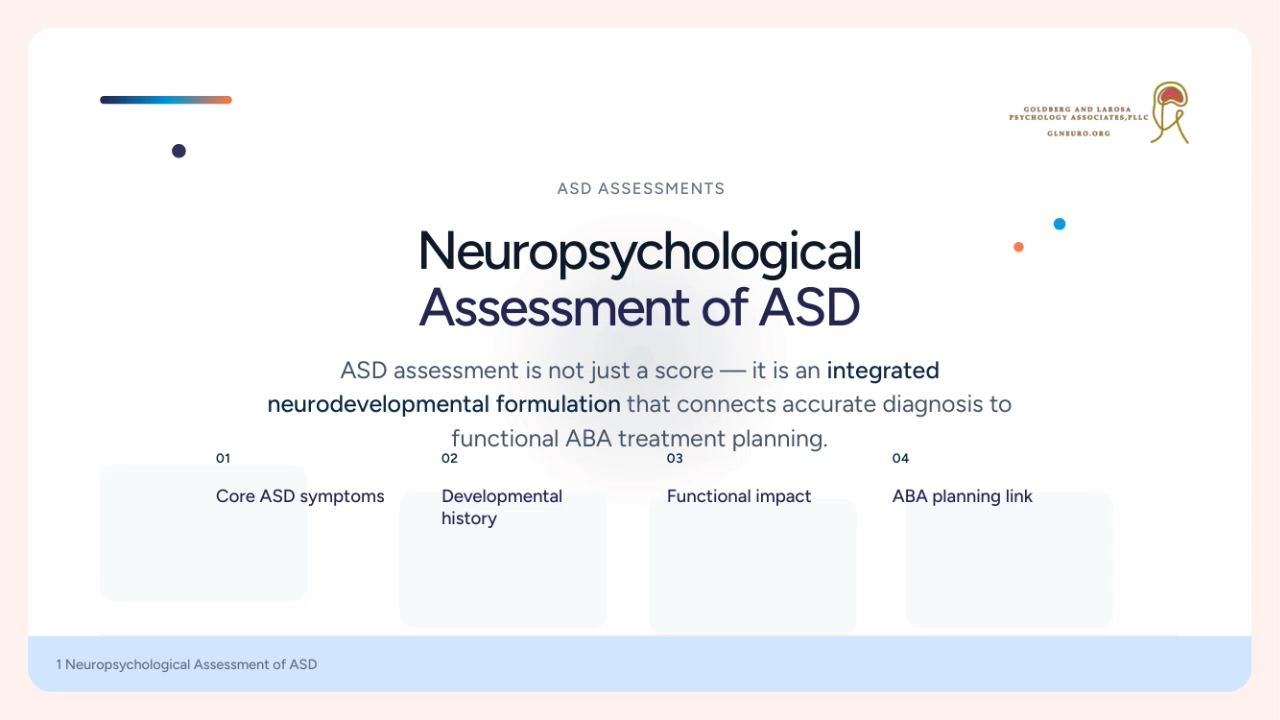
Neuropsychological Assessment and ABA Decision-Making in Autism and Neurodevelopmental Disorders
Resource Disclaimer and User Responsibility
Goldberg & LaRosa Psychology Associates, PLLC provides these ASD assessment-related resources for educational purposes only. They are intended to support professional learning and discussion and are not clinical advice, diagnostic direction, legal guidance, supervision, or a substitute for independent professional judgment.
Users are responsible for verifying information through appropriate primary sources, including test publishers, manuals, licensing boards, professional organizations, laws, regulations, and ethical standards. Users must apply any information only within their own training, competence, licensure, certification, professional role, and scope of practice.
Mention of any assessment tool, measure, publisher, method, or resource is for educational reference only and does not constitute endorsement, recommendation, authorization, or confirmation that the tool is appropriate for any particular person, setting, or purpose.
Goldberg & LaRosa makes reasonable efforts to provide useful information but does not guarantee that the materials are complete, current, error-free, or suitable for any specific use. Assessment standards, legal requirements, publisher rules, and professional guidelines may change.
Use of these materials is at the user’s own discretion and risk. Goldberg & LaRosa Psychology Associates, PLLC is not responsible for decisions, actions, reports, recommendations, conclusions, or consequences arising from use of or reliance on these materials.
All Goldberg & LaRosa-created materials are protected by copyright and may not be copied, distributed, modified, sold, published, or used for commercial redistribution without written permission. Users must comply with all test security, publisher, licensing, ethical, legal, and intellectual property requirements.
By accessing, downloading, or using these resources, you confirm that you understand and agree to use them lawfully, ethically, and within your professional scope.
Resource Disclaimer and User Responsibility
Goldberg & LaRosa Psychology Associates, PLLC provides these ASD assessment-related resources for educational purposes only. They are intended to support professional learning and discussion and are not clinical advice, diagnostic direction, legal guidance, supervision, or a substitute for independent professional judgment.
Users are responsible for verifying information through appropriate primary sources, including test publishers, manuals, licensing boards, professional organizations, laws, regulations, and ethical standards. Users must apply any information only within their own training, competence, licensure, certification, professional role, and scope of practice.
Mention of any assessment tool, measure, publisher, method, or resource is for educational reference only and does not constitute endorsement, recommendation, authorization, or confirmation that the tool is appropriate for any particular person, setting, or purpose.
Goldberg & LaRosa makes reasonable efforts to provide useful information but does not guarantee that the materials are complete, current, error-free, or suitable for any specific use. Assessment standards, legal requirements, publisher rules, and professional guidelines may change.
Use of these materials is at the user’s own discretion and risk. Goldberg & LaRosa Psychology Associates, PLLC is not responsible for decisions, actions, reports, recommendations, conclusions, or consequences arising from use of or reliance on these materials.
All Goldberg & LaRosa-created materials are protected by copyright and may not be copied, distributed, modified, sold, published, or used for commercial redistribution without written permission. Users must comply with all test security, publisher, licensing, ethical, legal, and intellectual property requirements.
By accessing, downloading, or using these resources, you confirm that you understand and agree to use them lawfully, ethically, and within your professional scope.

Resource Disclaimer and User Responsibility
Goldberg & LaRosa Psychology Associates, PLLC provides these ASD assessment-related resources for educational purposes only. They are intended to support professional learning and discussion and are not clinical advice, diagnostic direction, legal guidance, supervision, or a substitute for independent professional judgment.
Users are responsible for verifying information through appropriate primary sources, including test publishers, manuals, licensing boards, professional organizations, laws, regulations, and ethical standards. Users must apply any information only within their own training, competence, licensure, certification, professional role, and scope of practice.
Mention of any assessment tool, measure, publisher, method, or resource is for educational reference only and does not constitute endorsement, recommendation, authorization, or confirmation that the tool is appropriate for any particular person, setting, or purpose.
Goldberg & LaRosa makes reasonable efforts to provide useful information but does not guarantee that the materials are complete, current, error-free, or suitable for any specific use. Assessment standards, legal requirements, publisher rules, and professional guidelines may change.
Use of these materials is at the user’s own discretion and risk. Goldberg & LaRosa Psychology Associates, PLLC is not responsible for decisions, actions, reports, recommendations, conclusions, or consequences arising from use of or reliance on these materials.
All Goldberg & LaRosa-created materials are protected by copyright and may not be copied, distributed, modified, sold, published, or used for commercial redistribution without written permission. Users must comply with all test security, publisher, licensing, ethical, legal, and intellectual property requirements.
By accessing, downloading, or using these resources, you confirm that you understand and agree to use them lawfully, ethically, and within your professional scope.
Resource Disclaimer and User Responsibility
Goldberg & LaRosa Psychology Associates, PLLC provides these ASD assessment-related resources for educational purposes only. They are intended to support professional learning and discussion and are not clinical advice, diagnostic direction, legal guidance, supervision, or a substitute for independent professional judgment.
Users are responsible for verifying information through appropriate primary sources, including test publishers, manuals, licensing boards, professional organizations, laws, regulations, and ethical standards. Users must apply any information only within their own training, competence, licensure, certification, professional role, and scope of practice.
Mention of any assessment tool, measure, publisher, method, or resource is for educational reference only and does not constitute endorsement, recommendation, authorization, or confirmation that the tool is appropriate for any particular person, setting, or purpose.
Goldberg & LaRosa makes reasonable efforts to provide useful information but does not guarantee that the materials are complete, current, error-free, or suitable for any specific use. Assessment standards, legal requirements, publisher rules, and professional guidelines may change.
Use of these materials is at the user’s own discretion and risk. Goldberg & LaRosa Psychology Associates, PLLC is not responsible for decisions, actions, reports, recommendations, conclusions, or consequences arising from use of or reliance on these materials.
All Goldberg & LaRosa-created materials are protected by copyright and may not be copied, distributed, modified, sold, published, or used for commercial redistribution without written permission. Users must comply with all test security, publisher, licensing, ethical, legal, and intellectual property requirements.
By accessing, downloading, or using these resources, you confirm that you understand and agree to use them lawfully, ethically, and within your professional scope.

Resource Disclaimer and User Responsibility
Goldberg & LaRosa Psychology Associates, PLLC provides these ASD assessment-related resources for educational purposes only. They are intended to support professional learning and discussion and are not clinical advice, diagnostic direction, legal guidance, supervision, or a substitute for independent professional judgment.
Users are responsible for verifying information through appropriate primary sources, including test publishers, manuals, licensing boards, professional organizations, laws, regulations, and ethical standards. Users must apply any information only within their own training, competence, licensure, certification, professional role, and scope of practice.
Mention of any assessment tool, measure, publisher, method, or resource is for educational reference only and does not constitute endorsement, recommendation, authorization, or confirmation that the tool is appropriate for any particular person, setting, or purpose.
Goldberg & LaRosa makes reasonable efforts to provide useful information but does not guarantee that the materials are complete, current, error-free, or suitable for any specific use. Assessment standards, legal requirements, publisher rules, and professional guidelines may change.
Use of these materials is at the user’s own discretion and risk. Goldberg & LaRosa Psychology Associates, PLLC is not responsible for decisions, actions, reports, recommendations, conclusions, or consequences arising from use of or reliance on these materials.
All Goldberg & LaRosa-created materials are protected by copyright and may not be copied, distributed, modified, sold, published, or used for commercial redistribution without written permission. Users must comply with all test security, publisher, licensing, ethical, legal, and intellectual property requirements.
By accessing, downloading, or using these resources, you confirm that you understand and agree to use them lawfully, ethically, and within your professional scope.
Resource Disclaimer and User Responsibility
Goldberg & LaRosa Psychology Associates, PLLC provides these ASD assessment-related resources for educational purposes only. They are intended to support professional learning and discussion and are not clinical advice, diagnostic direction, legal guidance, supervision, or a substitute for independent professional judgment.
Users are responsible for verifying information through appropriate primary sources, including test publishers, manuals, licensing boards, professional organizations, laws, regulations, and ethical standards. Users must apply any information only within their own training, competence, licensure, certification, professional role, and scope of practice.
Mention of any assessment tool, measure, publisher, method, or resource is for educational reference only and does not constitute endorsement, recommendation, authorization, or confirmation that the tool is appropriate for any particular person, setting, or purpose.
Goldberg & LaRosa makes reasonable efforts to provide useful information but does not guarantee that the materials are complete, current, error-free, or suitable for any specific use. Assessment standards, legal requirements, publisher rules, and professional guidelines may change.
Use of these materials is at the user’s own discretion and risk. Goldberg & LaRosa Psychology Associates, PLLC is not responsible for decisions, actions, reports, recommendations, conclusions, or consequences arising from use of or reliance on these materials.
All Goldberg & LaRosa-created materials are protected by copyright and may not be copied, distributed, modified, sold, published, or used for commercial redistribution without written permission. Users must comply with all test security, publisher, licensing, ethical, legal, and intellectual property requirements.
By accessing, downloading, or using these resources, you confirm that you understand and agree to use them lawfully, ethically, and within your professional scope.
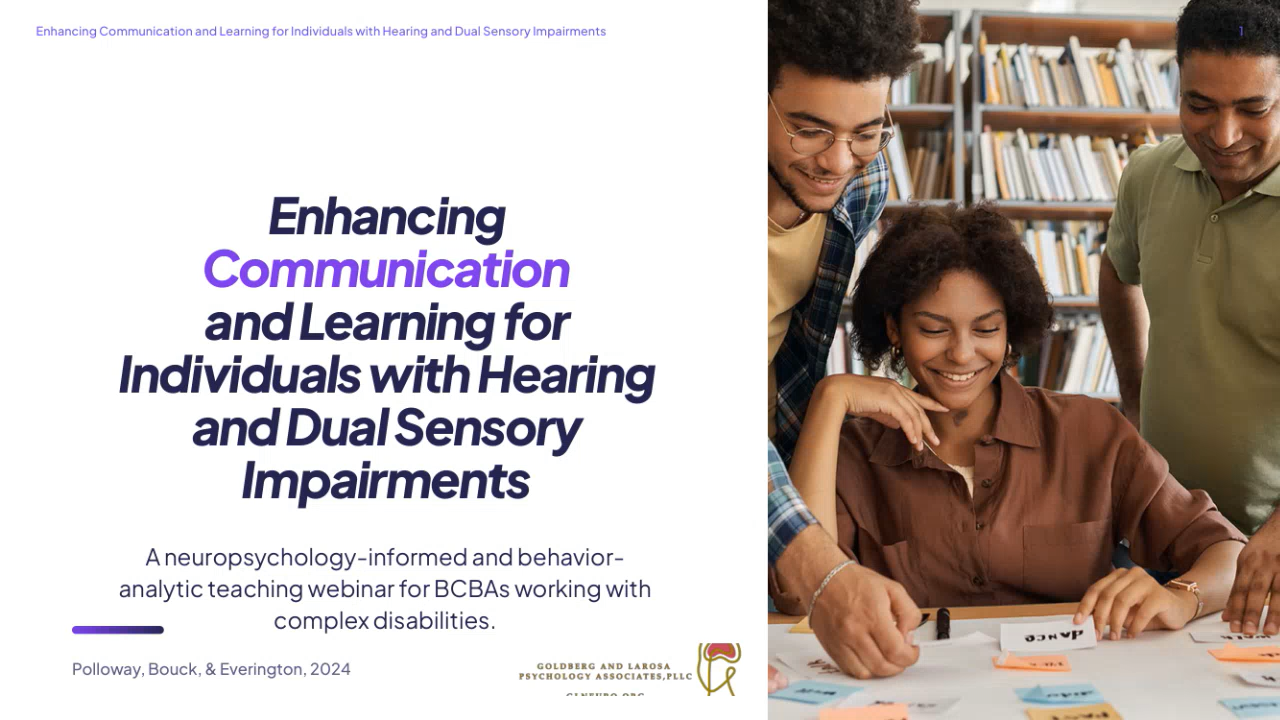
Enhancing Communication and Learning for Individuals with Hearing and Dual Sensory Impairments
Resource Disclaimer and User Responsibility
Goldberg & LaRosa Psychology Associates, PLLC provides these ASD assessment-related resources for educational purposes only. They are intended to support professional learning and discussion and are not clinical advice, diagnostic direction, legal guidance, supervision, or a substitute for independent professional judgment.
Users are responsible for verifying information through appropriate primary sources, including test publishers, manuals, licensing boards, professional organizations, laws, regulations, and ethical standards. Users must apply any information only within their own training, competence, licensure, certification, professional role, and scope of practice.
Mention of any assessment tool, measure, publisher, method, or resource is for educational reference only and does not constitute endorsement, recommendation, authorization, or confirmation that the tool is appropriate for any particular person, setting, or purpose.
Goldberg & LaRosa makes reasonable efforts to provide useful information but does not guarantee that the materials are complete, current, error-free, or suitable for any specific use. Assessment standards, legal requirements, publisher rules, and professional guidelines may change.
Use of these materials is at the user’s own discretion and risk. Goldberg & LaRosa Psychology Associates, PLLC is not responsible for decisions, actions, reports, recommendations, conclusions, or consequences arising from use of or reliance on these materials.
All Goldberg & LaRosa-created materials are protected by copyright and may not be copied, distributed, modified, sold, published, or used for commercial redistribution without written permission. Users must comply with all test security, publisher, licensing, ethical, legal, and intellectual property requirements.
By accessing, downloading, or using these resources, you confirm that you understand and agree to use them lawfully, ethically, and within your professional scope.
Resource Disclaimer and User Responsibility
Goldberg & LaRosa Psychology Associates, PLLC provides these ASD assessment-related resources for educational purposes only. They are intended to support professional learning and discussion and are not clinical advice, diagnostic direction, legal guidance, supervision, or a substitute for independent professional judgment.
Users are responsible for verifying information through appropriate primary sources, including test publishers, manuals, licensing boards, professional organizations, laws, regulations, and ethical standards. Users must apply any information only within their own training, competence, licensure, certification, professional role, and scope of practice.
Mention of any assessment tool, measure, publisher, method, or resource is for educational reference only and does not constitute endorsement, recommendation, authorization, or confirmation that the tool is appropriate for any particular person, setting, or purpose.
Goldberg & LaRosa makes reasonable efforts to provide useful information but does not guarantee that the materials are complete, current, error-free, or suitable for any specific use. Assessment standards, legal requirements, publisher rules, and professional guidelines may change.
Use of these materials is at the user’s own discretion and risk. Goldberg & LaRosa Psychology Associates, PLLC is not responsible for decisions, actions, reports, recommendations, conclusions, or consequences arising from use of or reliance on these materials.
All Goldberg & LaRosa-created materials are protected by copyright and may not be copied, distributed, modified, sold, published, or used for commercial redistribution without written permission. Users must comply with all test security, publisher, licensing, ethical, legal, and intellectual property requirements.
By accessing, downloading, or using these resources, you confirm that you understand and agree to use them lawfully, ethically, and within your professional scope.
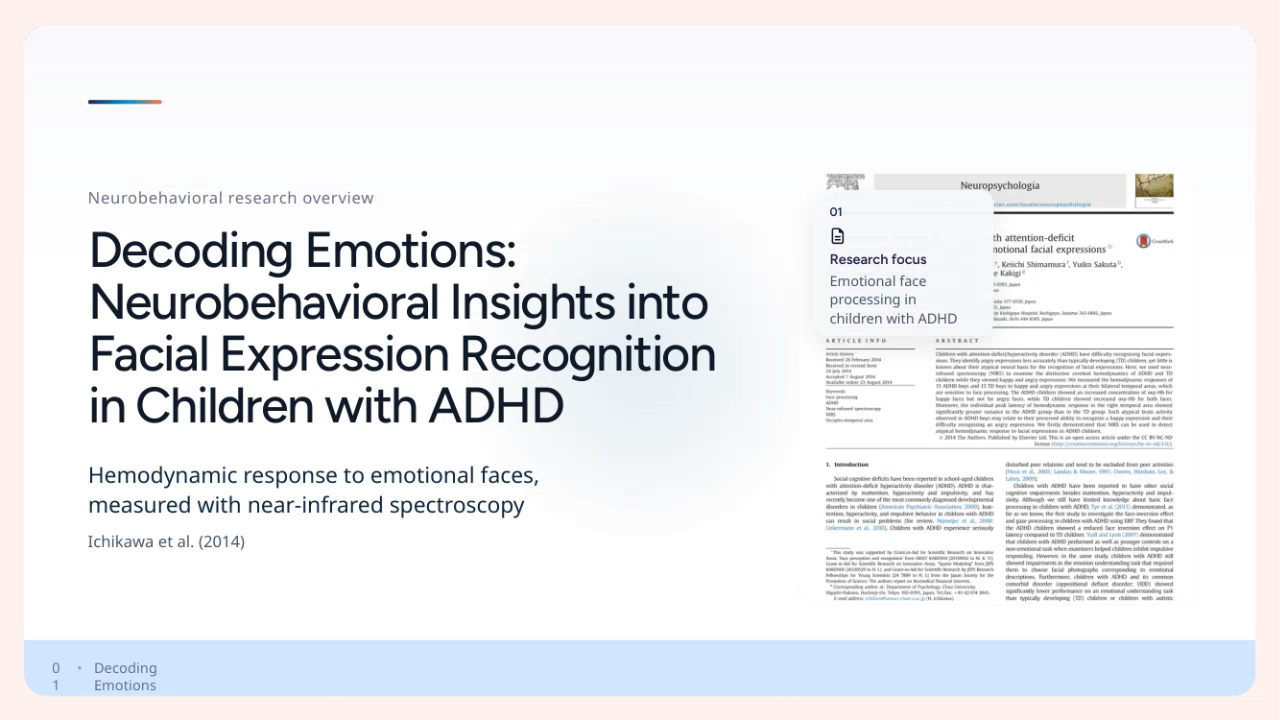
Decoding Emotions: Neurobehavioral Research on Facial Expression Recognition in Children with ADHD
Resource Disclaimer and User Responsibility
Goldberg & LaRosa Psychology Associates, PLLC provides these ASD assessment-related resources for educational purposes only. They are intended to support professional learning and discussion and are not clinical advice, diagnostic direction, legal guidance, supervision, or a substitute for independent professional judgment.
Users are responsible for verifying information through appropriate primary sources, including test publishers, manuals, licensing boards, professional organizations, laws, regulations, and ethical standards. Users must apply any information only within their own training, competence, licensure, certification, professional role, and scope of practice.
Mention of any assessment tool, measure, publisher, method, or resource is for educational reference only and does not constitute endorsement, recommendation, authorization, or confirmation that the tool is appropriate for any particular person, setting, or purpose.
Goldberg & LaRosa makes reasonable efforts to provide useful information but does not guarantee that the materials are complete, current, error-free, or suitable for any specific use. Assessment standards, legal requirements, publisher rules, and professional guidelines may change.
Use of these materials is at the user’s own discretion and risk. Goldberg & LaRosa Psychology Associates, PLLC is not responsible for decisions, actions, reports, recommendations, conclusions, or consequences arising from use of or reliance on these materials.
All Goldberg & LaRosa-created materials are protected by copyright and may not be copied, distributed, modified, sold, published, or used for commercial redistribution without written permission. Users must comply with all test security, publisher, licensing, ethical, legal, and intellectual property requirements.
By accessing, downloading, or using these resources, you confirm that you understand and agree to use them lawfully, ethically, and within your professional scope.

Resource Disclaimer and User Responsibility
Goldberg & LaRosa Psychology Associates, PLLC provides these ASD assessment-related resources for educational purposes only. They are intended to support professional learning and discussion and are not clinical advice, diagnostic direction, legal guidance, supervision, or a substitute for independent professional judgment.
Users are responsible for verifying information through appropriate primary sources, including test publishers, manuals, licensing boards, professional organizations, laws, regulations, and ethical standards. Users must apply any information only within their own training, competence, licensure, certification, professional role, and scope of practice.
Mention of any assessment tool, measure, publisher, method, or resource is for educational reference only and does not constitute endorsement, recommendation, authorization, or confirmation that the tool is appropriate for any particular person, setting, or purpose.
Goldberg & LaRosa makes reasonable efforts to provide useful information but does not guarantee that the materials are complete, current, error-free, or suitable for any specific use. Assessment standards, legal requirements, publisher rules, and professional guidelines may change.
Use of these materials is at the user’s own discretion and risk. Goldberg & LaRosa Psychology Associates, PLLC is not responsible for decisions, actions, reports, recommendations, conclusions, or consequences arising from use of or reliance on these materials.
All Goldberg & LaRosa-created materials are protected by copyright and may not be copied, distributed, modified, sold, published, or used for commercial redistribution without written permission. Users must comply with all test security, publisher, licensing, ethical, legal, and intellectual property requirements.
By accessing, downloading, or using these resources, you confirm that you understand and agree to use them lawfully, ethically, and within your professional scope.
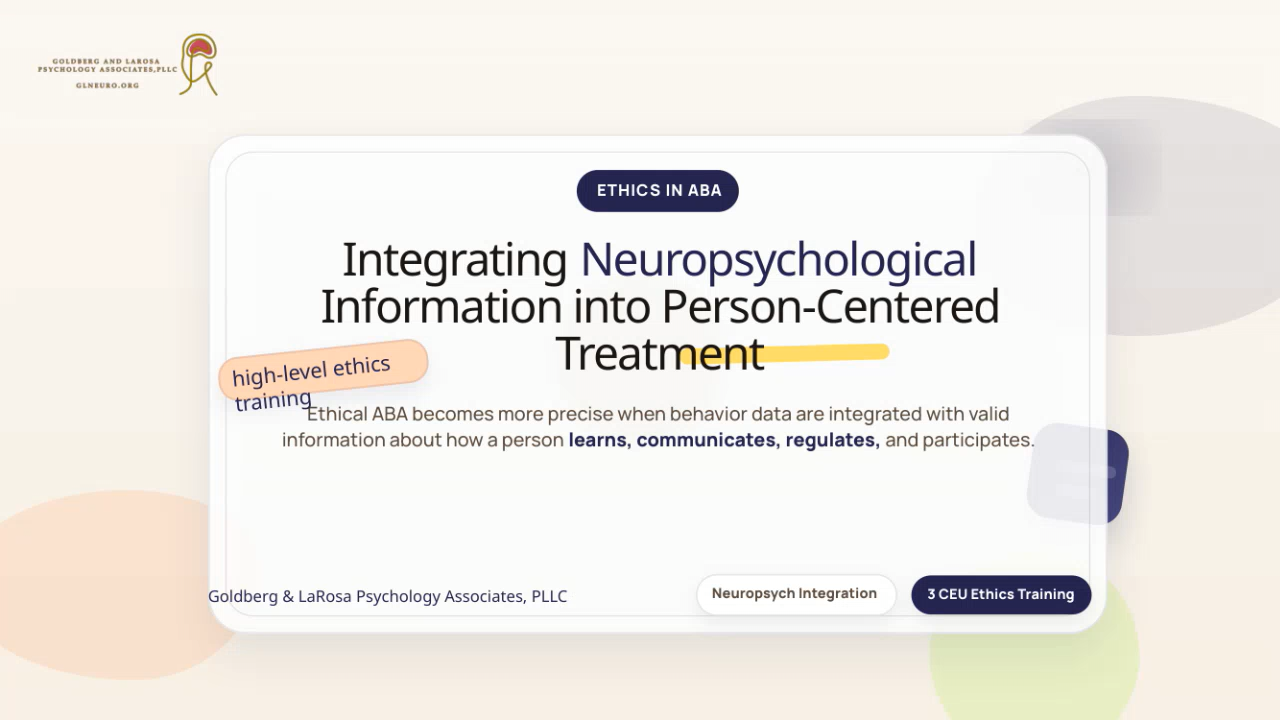
The Whole Learner in ABA: Ethics, Neuropsychology, and Psychoeducational Assessment for Better Programming
Resource Disclaimer and User Responsibility
Goldberg & LaRosa Psychology Associates, PLLC provides these ASD assessment-related resources for educational purposes only. They are intended to support professional learning and discussion and are not clinical advice, diagnostic direction, legal guidance, supervision, or a substitute for independent professional judgment.
Users are responsible for verifying information through appropriate primary sources, including test publishers, manuals, licensing boards, professional organizations, laws, regulations, and ethical standards. Users must apply any information only within their own training, competence, licensure, certification, professional role, and scope of practice.
Mention of any assessment tool, measure, publisher, method, or resource is for educational reference only and does not constitute endorsement, recommendation, authorization, or confirmation that the tool is appropriate for any particular person, setting, or purpose.
Goldberg & LaRosa makes reasonable efforts to provide useful information but does not guarantee that the materials are complete, current, error-free, or suitable for any specific use. Assessment standards, legal requirements, publisher rules, and professional guidelines may change.
Use of these materials is at the user’s own discretion and risk. Goldberg & LaRosa Psychology Associates, PLLC is not responsible for decisions, actions, reports, recommendations, conclusions, or consequences arising from use of or reliance on these materials.
All Goldberg & LaRosa-created materials are protected by copyright and may not be copied, distributed, modified, sold, published, or used for commercial redistribution without written permission. Users must comply with all test security, publisher, licensing, ethical, legal, and intellectual property requirements.
By accessing, downloading, or using these resources, you confirm that you understand and agree to use them lawfully, ethically, and within your professional scope.

Resource Disclaimer and User Responsibility
Goldberg & LaRosa Psychology Associates, PLLC provides these ASD assessment-related resources for educational purposes only. They are intended to support professional learning and discussion and are not clinical advice, diagnostic direction, legal guidance, supervision, or a substitute for independent professional judgment.
Users are responsible for verifying information through appropriate primary sources, including test publishers, manuals, licensing boards, professional organizations, laws, regulations, and ethical standards. Users must apply any information only within their own training, competence, licensure, certification, professional role, and scope of practice.
Mention of any assessment tool, measure, publisher, method, or resource is for educational reference only and does not constitute endorsement, recommendation, authorization, or confirmation that the tool is appropriate for any particular person, setting, or purpose.
Goldberg & LaRosa makes reasonable efforts to provide useful information but does not guarantee that the materials are complete, current, error-free, or suitable for any specific use. Assessment standards, legal requirements, publisher rules, and professional guidelines may change.
Use of these materials is at the user’s own discretion and risk. Goldberg & LaRosa Psychology Associates, PLLC is not responsible for decisions, actions, reports, recommendations, conclusions, or consequences arising from use of or reliance on these materials.
All Goldberg & LaRosa-created materials are protected by copyright and may not be copied, distributed, modified, sold, published, or used for commercial redistribution without written permission. Users must comply with all test security, publisher, licensing, ethical, legal, and intellectual property requirements.
By accessing, downloading, or using these resources, you confirm that you understand and agree to use them lawfully, ethically, and within your professional scope.
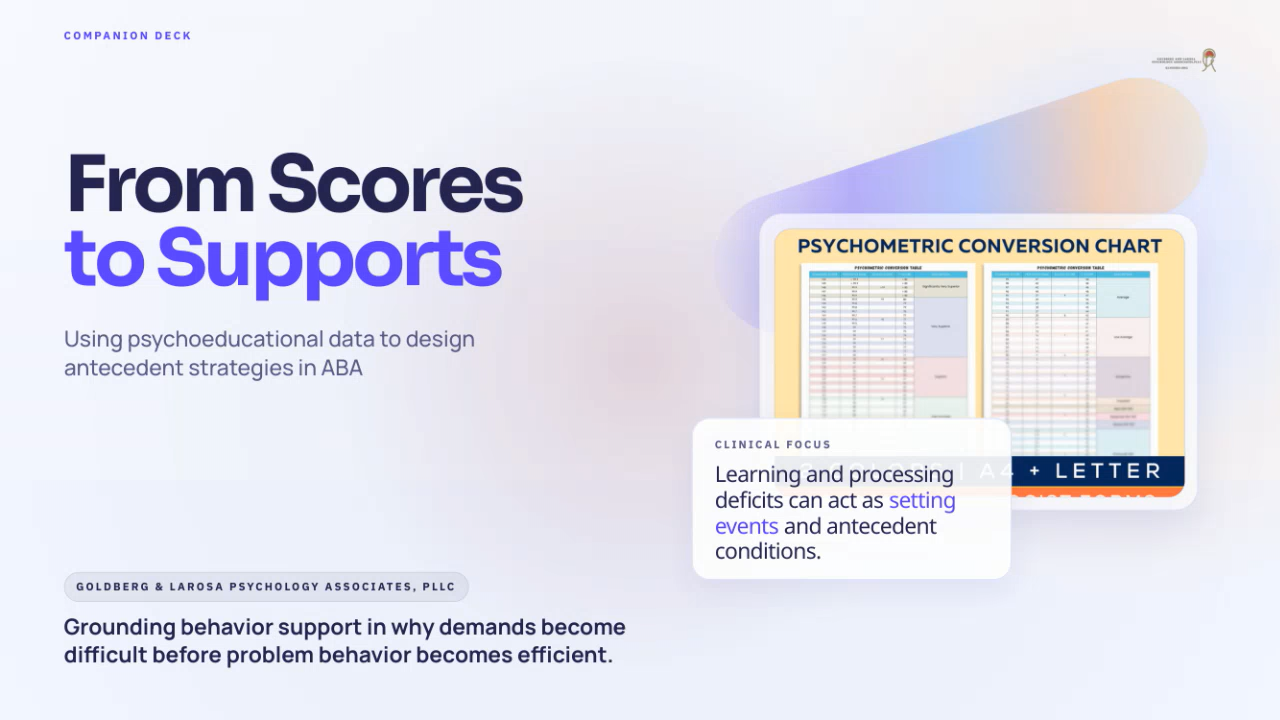
From Scores to Supports: Using Psychoeducational Data for Antecedent-Based ABA Programming
Resource Disclaimer and User Responsibility
Goldberg & LaRosa Psychology Associates, PLLC provides these ASD assessment-related resources for educational purposes only. They are intended to support professional learning and discussion and are not clinical advice, diagnostic direction, legal guidance, supervision, or a substitute for independent professional judgment.
Users are responsible for verifying information through appropriate primary sources, including test publishers, manuals, licensing boards, professional organizations, laws, regulations, and ethical standards. Users must apply any information only within their own training, competence, licensure, certification, professional role, and scope of practice.
Mention of any assessment tool, measure, publisher, method, or resource is for educational reference only and does not constitute endorsement, recommendation, authorization, or confirmation that the tool is appropriate for any particular person, setting, or purpose.
Goldberg & LaRosa makes reasonable efforts to provide useful information but does not guarantee that the materials are complete, current, error-free, or suitable for any specific use. Assessment standards, legal requirements, publisher rules, and professional guidelines may change.
Use of these materials is at the user’s own discretion and risk. Goldberg & LaRosa Psychology Associates, PLLC is not responsible for decisions, actions, reports, recommendations, conclusions, or consequences arising from use of or reliance on these materials.
All Goldberg & LaRosa-created materials are protected by copyright and may not be copied, distributed, modified, sold, published, or used for commercial redistribution without written permission. Users must comply with all test security, publisher, licensing, ethical, legal, and intellectual property requirements.
By accessing, downloading, or using these resources, you confirm that you understand and agree to use them lawfully, ethically, and within your professional scope.
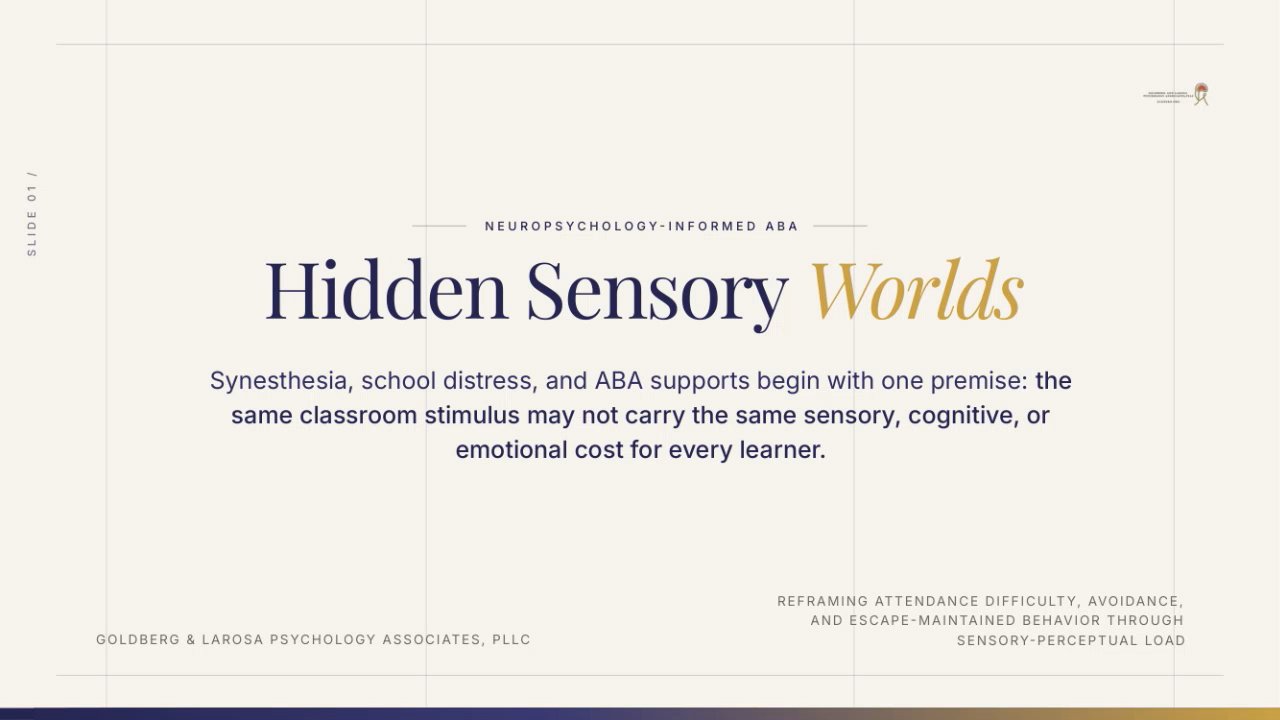
Hidden Sensory Worlds: Synesthesia, School Distress, and Neuropsychology-Informed ABA Supports
Resource Disclaimer and User Responsibility
Goldberg & LaRosa Psychology Associates, PLLC provides these ASD assessment-related resources for educational purposes only. They are intended to support professional learning and discussion and are not clinical advice, diagnostic direction, legal guidance, supervision, or a substitute for independent professional judgment.
Users are responsible for verifying information through appropriate primary sources, including test publishers, manuals, licensing boards, professional organizations, laws, regulations, and ethical standards. Users must apply any information only within their own training, competence, licensure, certification, professional role, and scope of practice.
Mention of any assessment tool, measure, publisher, method, or resource is for educational reference only and does not constitute endorsement, recommendation, authorization, or confirmation that the tool is appropriate for any particular person, setting, or purpose.
Goldberg & LaRosa makes reasonable efforts to provide useful information but does not guarantee that the materials are complete, current, error-free, or suitable for any specific use. Assessment standards, legal requirements, publisher rules, and professional guidelines may change.
Use of these materials is at the user’s own discretion and risk. Goldberg & LaRosa Psychology Associates, PLLC is not responsible for decisions, actions, reports, recommendations, conclusions, or consequences arising from use of or reliance on these materials.
All Goldberg & LaRosa-created materials are protected by copyright and may not be copied, distributed, modified, sold, published, or used for commercial redistribution without written permission. Users must comply with all test security, publisher, licensing, ethical, legal, and intellectual property requirements.
By accessing, downloading, or using these resources, you confirm that you understand and agree to use them lawfully, ethically, and within your professional scope.
Seizure-Related Aggression in Autism: A Neuropsychology and Neurophysiology-Informed Framework for Clinical Interpretation
Resource Disclaimer and User Responsibility
Goldberg & LaRosa Psychology Associates, PLLC provides these ASD assessment-related resources for educational purposes only. They are intended to support professional learning and discussion and are not clinical advice, diagnostic direction, legal guidance, supervision, or a substitute for independent professional judgment.
Users are responsible for verifying information through appropriate primary sources, including test publishers, manuals, licensing boards, professional organizations, laws, regulations, and ethical standards. Users must apply any information only within their own training, competence, licensure, certification, professional role, and scope of practice.
Mention of any assessment tool, measure, publisher, method, or resource is for educational reference only and does not constitute endorsement, recommendation, authorization, or confirmation that the tool is appropriate for any particular person, setting, or purpose.
Goldberg & LaRosa makes reasonable efforts to provide useful information but does not guarantee that the materials are complete, current, error-free, or suitable for any specific use. Assessment standards, legal requirements, publisher rules, and professional guidelines may change.
Use of these materials is at the user’s own discretion and risk. Goldberg & LaRosa Psychology Associates, PLLC is not responsible for decisions, actions, reports, recommendations, conclusions, or consequences arising from use of or reliance on these materials.
All Goldberg & LaRosa-created materials are protected by copyright and may not be copied, distributed, modified, sold, published, or used for commercial redistribution without written permission. Users must comply with all test security, publisher, licensing, ethical, legal, and intellectual property requirements.
By accessing, downloading, or using these resources, you confirm that you understand and agree to use them lawfully, ethically, and within your professional scope.
Resource Disclaimer and User Responsibility
Goldberg & LaRosa Psychology Associates, PLLC provides these ASD assessment-related resources for educational purposes only. They are intended to support professional learning and discussion and are not clinical advice, diagnostic direction, legal guidance, supervision, or a substitute for independent professional judgment.
Users are responsible for verifying information through appropriate primary sources, including test publishers, manuals, licensing boards, professional organizations, laws, regulations, and ethical standards. Users must apply any information only within their own training, competence, licensure, certification, professional role, and scope of practice.
Mention of any assessment tool, measure, publisher, method, or resource is for educational reference only and does not constitute endorsement, recommendation, authorization, or confirmation that the tool is appropriate for any particular person, setting, or purpose.
Goldberg & LaRosa makes reasonable efforts to provide useful information but does not guarantee that the materials are complete, current, error-free, or suitable for any specific use. Assessment standards, legal requirements, publisher rules, and professional guidelines may change.
Use of these materials is at the user’s own discretion and risk. Goldberg & LaRosa Psychology Associates, PLLC is not responsible for decisions, actions, reports, recommendations, conclusions, or consequences arising from use of or reliance on these materials.
All Goldberg & LaRosa-created materials are protected by copyright and may not be copied, distributed, modified, sold, published, or used for commercial redistribution without written permission. Users must comply with all test security, publisher, licensing, ethical, legal, and intellectual property requirements.
By accessing, downloading, or using these resources, you confirm that you understand and agree to use them lawfully, ethically, and within your professional scope.
Resource Disclaimer and User Responsibility
Goldberg & LaRosa Psychology Associates, PLLC provides these ASD assessment-related resources for educational purposes only. They are intended to support professional learning and discussion and are not clinical advice, diagnostic direction, legal guidance, supervision, or a substitute for independent professional judgment.
Users are responsible for verifying information through appropriate primary sources, including test publishers, manuals, licensing boards, professional organizations, laws, regulations, and ethical standards. Users must apply any information only within their own training, competence, licensure, certification, professional role, and scope of practice.
Mention of any assessment tool, measure, publisher, method, or resource is for educational reference only and does not constitute endorsement, recommendation, authorization, or confirmation that the tool is appropriate for any particular person, setting, or purpose.
Goldberg & LaRosa makes reasonable efforts to provide useful information but does not guarantee that the materials are complete, current, error-free, or suitable for any specific use. Assessment standards, legal requirements, publisher rules, and professional guidelines may change.
Use of these materials is at the user’s own discretion and risk. Goldberg & LaRosa Psychology Associates, PLLC is not responsible for decisions, actions, reports, recommendations, conclusions, or consequences arising from use of or reliance on these materials.
All Goldberg & LaRosa-created materials are protected by copyright and may not be copied, distributed, modified, sold, published, or used for commercial redistribution without written permission. Users must comply with all test security, publisher, licensing, ethical, legal, and intellectual property requirements.
By accessing, downloading, or using these resources, you confirm that you understand and agree to use them lawfully, ethically, and within your professional scope.

Anxiety in Autism: What the Brain, Body, and Behavior May Be Communicating
Resource Disclaimer and User Responsibility
Goldberg & LaRosa Psychology Associates, PLLC provides these ASD assessment-related resources for educational purposes only. They are intended to support professional learning and discussion and are not clinical advice, diagnostic direction, legal guidance, supervision, or a substitute for independent professional judgment.
Users are responsible for verifying information through appropriate primary sources, including test publishers, manuals, licensing boards, professional organizations, laws, regulations, and ethical standards. Users must apply any information only within their own training, competence, licensure, certification, professional role, and scope of practice.
Mention of any assessment tool, measure, publisher, method, or resource is for educational reference only and does not constitute endorsement, recommendation, authorization, or confirmation that the tool is appropriate for any particular person, setting, or purpose.
Goldberg & LaRosa makes reasonable efforts to provide useful information but does not guarantee that the materials are complete, current, error-free, or suitable for any specific use. Assessment standards, legal requirements, publisher rules, and professional guidelines may change.
Use of these materials is at the user’s own discretion and risk. Goldberg & LaRosa Psychology Associates, PLLC is not responsible for decisions, actions, reports, recommendations, conclusions, or consequences arising from use of or reliance on these materials.
All Goldberg & LaRosa-created materials are protected by copyright and may not be copied, distributed, modified, sold, published, or used for commercial redistribution without written permission. Users must comply with all test security, publisher, licensing, ethical, legal, and intellectual property requirements.
By accessing, downloading, or using these resources, you confirm that you understand and agree to use them lawfully, ethically, and within your professional scope.
Resource Disclaimer and User Responsibility
Goldberg & LaRosa Psychology Associates, PLLC provides these ASD assessment-related resources for educational purposes only. They are intended to support professional learning and discussion and are not clinical advice, diagnostic direction, legal guidance, supervision, or a substitute for independent professional judgment.
Users are responsible for verifying information through appropriate primary sources, including test publishers, manuals, licensing boards, professional organizations, laws, regulations, and ethical standards. Users must apply any information only within their own training, competence, licensure, certification, professional role, and scope of practice.
Mention of any assessment tool, measure, publisher, method, or resource is for educational reference only and does not constitute endorsement, recommendation, authorization, or confirmation that the tool is appropriate for any particular person, setting, or purpose.
Goldberg & LaRosa makes reasonable efforts to provide useful information but does not guarantee that the materials are complete, current, error-free, or suitable for any specific use. Assessment standards, legal requirements, publisher rules, and professional guidelines may change.
Use of these materials is at the user’s own discretion and risk. Goldberg & LaRosa Psychology Associates, PLLC is not responsible for decisions, actions, reports, recommendations, conclusions, or consequences arising from use of or reliance on these materials.
All Goldberg & LaRosa-created materials are protected by copyright and may not be copied, distributed, modified, sold, published, or used for commercial redistribution without written permission. Users must comply with all test security, publisher, licensing, ethical, legal, and intellectual property requirements.
By accessing, downloading, or using these resources, you confirm that you understand and agree to use them lawfully, ethically, and within your professional scope.
The Owner Mentality: Using OBM to Build an ABA Organization People Want to Grow
Resource Disclaimer and User Responsibility
Goldberg & LaRosa Psychology Associates, PLLC provides these ASD assessment-related resources for educational purposes only. They are intended to support professional learning and discussion and are not clinical advice, diagnostic direction, legal guidance, supervision, or a substitute for independent professional judgment.
Users are responsible for verifying information through appropriate primary sources, including test publishers, manuals, licensing boards, professional organizations, laws, regulations, and ethical standards. Users must apply any information only within their own training, competence, licensure, certification, professional role, and scope of practice.
Mention of any assessment tool, measure, publisher, method, or resource is for educational reference only and does not constitute endorsement, recommendation, authorization, or confirmation that the tool is appropriate for any particular person, setting, or purpose.
Goldberg & LaRosa makes reasonable efforts to provide useful information but does not guarantee that the materials are complete, current, error-free, or suitable for any specific use. Assessment standards, legal requirements, publisher rules, and professional guidelines may change.
Use of these materials is at the user’s own discretion and risk. Goldberg & LaRosa Psychology Associates, PLLC is not responsible for decisions, actions, reports, recommendations, conclusions, or consequences arising from use of or reliance on these materials.
All Goldberg & LaRosa-created materials are protected by copyright and may not be copied, distributed, modified, sold, published, or used for commercial redistribution without written permission. Users must comply with all test security, publisher, licensing, ethical, legal, and intellectual property requirements.
By accessing, downloading, or using these resources, you confirm that you understand and agree to use them lawfully, ethically, and within your professional scope.
Resource Disclaimer and User Responsibility
Goldberg & LaRosa Psychology Associates, PLLC provides these ASD assessment-related resources for educational purposes only. They are intended to support professional learning and discussion and are not clinical advice, diagnostic direction, legal guidance, supervision, or a substitute for independent professional judgment.
Users are responsible for verifying information through appropriate primary sources, including test publishers, manuals, licensing boards, professional organizations, laws, regulations, and ethical standards. Users must apply any information only within their own training, competence, licensure, certification, professional role, and scope of practice.
Mention of any assessment tool, measure, publisher, method, or resource is for educational reference only and does not constitute endorsement, recommendation, authorization, or confirmation that the tool is appropriate for any particular person, setting, or purpose.
Goldberg & LaRosa makes reasonable efforts to provide useful information but does not guarantee that the materials are complete, current, error-free, or suitable for any specific use. Assessment standards, legal requirements, publisher rules, and professional guidelines may change.
Use of these materials is at the user’s own discretion and risk. Goldberg & LaRosa Psychology Associates, PLLC is not responsible for decisions, actions, reports, recommendations, conclusions, or consequences arising from use of or reliance on these materials.
All Goldberg & LaRosa-created materials are protected by copyright and may not be copied, distributed, modified, sold, published, or used for commercial redistribution without written permission. Users must comply with all test security, publisher, licensing, ethical, legal, and intellectual property requirements.
By accessing, downloading, or using these resources, you confirm that you understand and agree to use them lawfully, ethically, and within your professional scope.
Beyond the Topography: Brain Systems Behind Stimming, Rigidity, and Emotional Dysregulation
Resource Disclaimer and User Responsibility
Goldberg & LaRosa Psychology Associates, PLLC provides these ASD assessment-related resources for educational purposes only. They are intended to support professional learning and discussion and are not clinical advice, diagnostic direction, legal guidance, supervision, or a substitute for independent professional judgment.
Users are responsible for verifying information through appropriate primary sources, including test publishers, manuals, licensing boards, professional organizations, laws, regulations, and ethical standards. Users must apply any information only within their own training, competence, licensure, certification, professional role, and scope of practice.
Mention of any assessment tool, measure, publisher, method, or resource is for educational reference only and does not constitute endorsement, recommendation, authorization, or confirmation that the tool is appropriate for any particular person, setting, or purpose.
Goldberg & LaRosa makes reasonable efforts to provide useful information but does not guarantee that the materials are complete, current, error-free, or suitable for any specific use. Assessment standards, legal requirements, publisher rules, and professional guidelines may change.
Use of these materials is at the user’s own discretion and risk. Goldberg & LaRosa Psychology Associates, PLLC is not responsible for decisions, actions, reports, recommendations, conclusions, or consequences arising from use of or reliance on these materials.
All Goldberg & LaRosa-created materials are protected by copyright and may not be copied, distributed, modified, sold, published, or used for commercial redistribution without written permission. Users must comply with all test security, publisher, licensing, ethical, legal, and intellectual property requirements.
By accessing, downloading, or using these resources, you confirm that you understand and agree to use them lawfully, ethically, and within your professional scope.
Contact
We’re here to help you understand the next step
Reach out if you would like to discuss a referral question, the type of evaluation you may need, scheduling, or whether our practice is the right fit.