Neurobehavioral Regulation in ADHD and Tourette’s
About Course
Implications for ABA Practice
This 2-part on-demand webinar series helps behavior analysts understand neurobehavioral systems involved in social perception, impulse control, motor regulation, exploratory behavior, tics, and self-regulation in ADHD, Tourette’s, and related neurodevelopmental profiles.
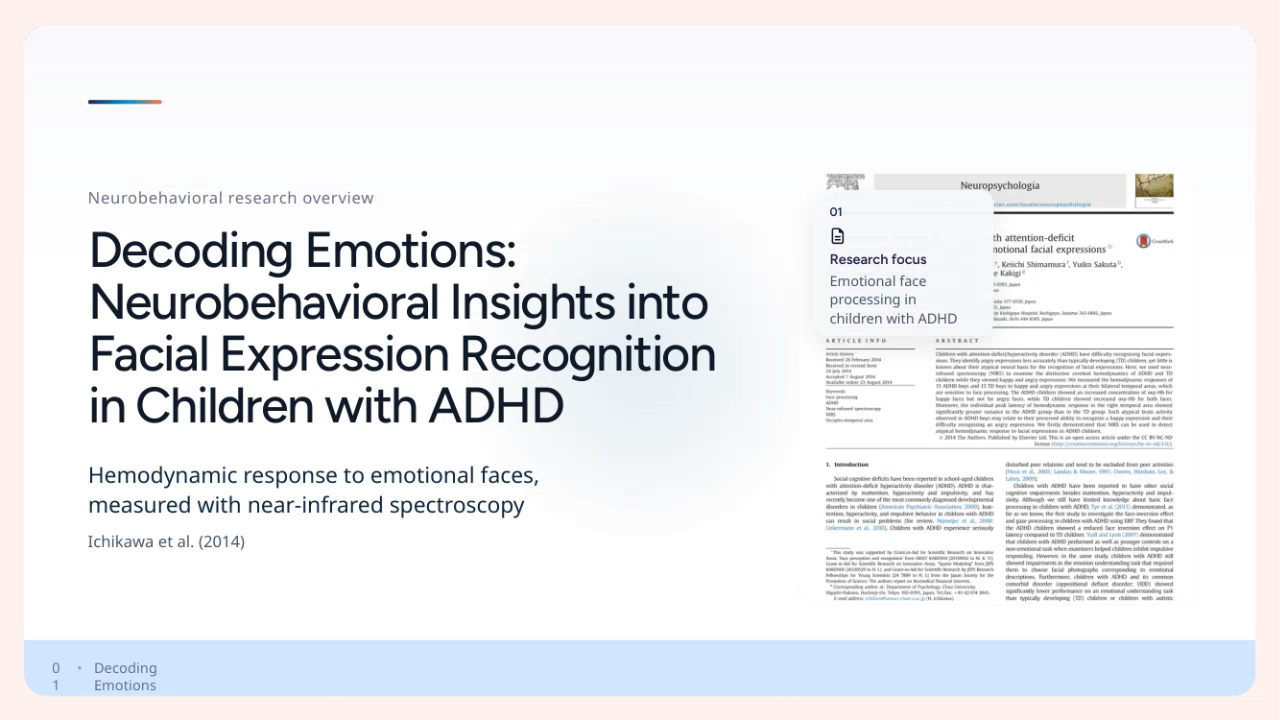
Part 1 focuses on facial expression recognition in children with ADHD. Participants will examine how children with ADHD may process emotional facial cues differently, including relatively preserved responses to happy faces and weaker, less consistent responses to negative emotional cues such as anger. The session explains how differences in neural activation, timing, and stimulus salience may affect social cue detection, discrimination, response latency, and consistency.
Part 2 examines Tourette’s and ADHD through a neuropsychological lens. Participants will consider how ADHD may be overdiagnosed when hyperactivity is conflated with excessive exploratory behavior, and how Tourette’s, frontal-lobe syndromes, Parkinson’s disease, and fronto-striatal regulation may be related. The session reviews distinct Tourette’s profiles associated with left versus right fronto-striatal dysregulation, including presentations dominated by tics versus excessive exploratory behavior.
Together, the sessions help BCBAs translate neurobehavioral findings into applied behavior analytic strategies. The course emphasizes careful assessment of stimulus control, emotional cue discrimination, response inhibition, timing, consistency, motor regulation, diagnostic confusion, and the conditions under which behavior may reflect regulation difficulty rather than willful noncompliance.
Format: 2-part on-demand webinar series
Length: 4 hours total
CEUs: 4.0 BACB CEUs
Audience: BCBAs, BCaBAs, behavior analysts, clinical supervisors, school-based behavior consultants, educators, and professionals supporting individuals with ADHD, Tourette’s, autism, tic-related behaviors, impulsivity, or social-regulatory challenges
Included Sessions
- Part 1: Decoding Emotions: Neurobehavioral Insights into Facial Expression Recognition in Children with ADHD, Dr. Vanetta LaRosa, 1 hour
- Part 2: Tourette and ADHD: A New Look at an Old Quandary, Dr. Goldberg, 3 hours
Learning Objectives
- Describe neurobehavioral systems involved in social perception, facial expression recognition, impulse control, motor regulation, and self-regulation.
- Explain how children with ADHD may show uneven processing of emotional facial cues, including stronger responses to positive expressions and weaker responses to negative expressions.
- Identify how reduced stimulus salience, delayed response latency, and inconsistent neural timing may affect social cue responsiveness.
- Apply ABA concepts such as stimulus control, discrimination training, multiple exemplars, response latency, consistency, conditional discrimination, prompting, and generalization to emotion-recognition programming.
- Differentiate hyperactivity from excessive exploratory behavior and explain how this distinction may affect diagnostic interpretation in ADHD and Tourette’s.
- Describe how fronto-striatal dysregulation may contribute to different Tourette’s profiles, including tic-dominant and exploratory-behavior presentations.
- Use neurobehavioral concepts to improve case conceptualization, social cue teaching, response inhibition supports, motor regulation strategies, and individualized ABA intervention planning.
Disclaimer
This training is for professional education only. Assessment instruments are discussed only at the level of general clinical purpose and treatment-planning implications. No proprietary test items, scoring forms, protocols, stimulus materials, rating-scale items, or administration procedures are reproduced. Participants should consult official publishers, manuals, and professional standards for authorized test administration, scoring, and interpretation.
Neurobehavioral Regulation in ADHD and Tourette’s
-
Part 1: Decoding Emotions: Neurobehavioral Insights into Facial Expression Recognition in Children with ADHD, Dr. Vanetta LaRosa
52:59 -
Part 2: Tourette and ADHD: A New Look at an Old Quandary, Dr. Goldberg
03:07:09 -
Quiz
Contact
We’re here to help you understand the next step
Reach out if you would like to discuss a referral question, the type of evaluation you may need, scheduling, or whether our practice is the right fit.