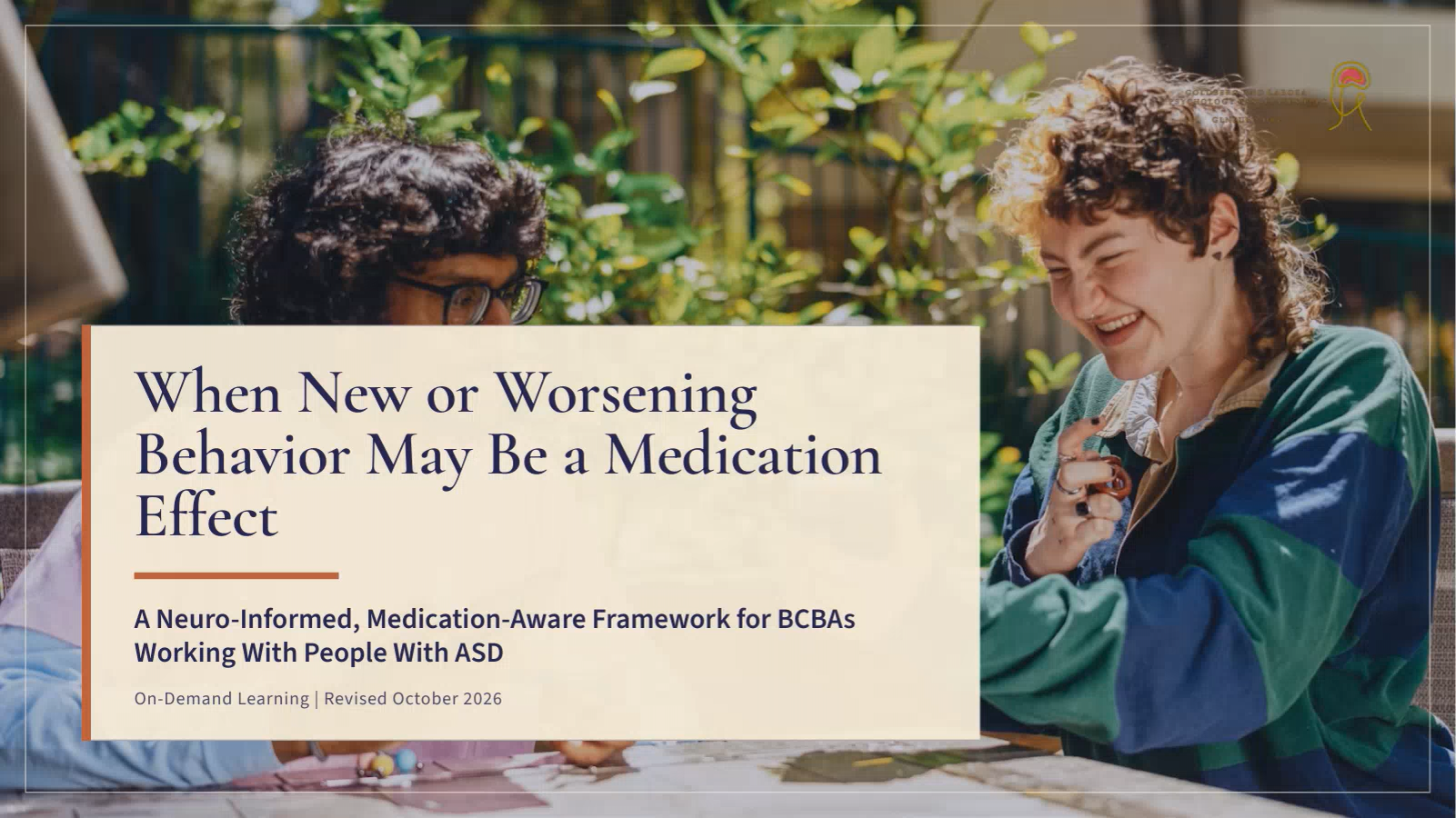
When New or Worsening Behavior May Be a Medication Effect
About Course
When a client develops new or worsening challenging behavior, has the behavioral function changed, is the intervention no longer effective, or could medication effects, sleep disruption, pain, or other physiological variables be contributing to the change?
This neuro-informed continuing education course examines how psychotropic medications and physiological variables may influence observable behavior in individuals with Autism Spectrum Disorder (ASD). Participants will explore how changes in alertness, attention, emotional regulation, sleep, appetite, arousal, and motor activity may affect behavioral functioning and potentially be mistaken for changes in behavioral function or treatment effectiveness.
Drawing on peer-reviewed research and applied clinical examples, the course reviews potential behavioral and physiological changes associated with medication classes commonly prescribed to individuals with ASD, including stimulants, antidepressants, antipsychotics, and alpha-2 adrenergic agonists. The emphasis is not on diagnosing medication side effects, but on recognizing meaningful changes from baseline that may warrant closer observation, interdisciplinary communication, or medical referral.
Participants will learn how to develop medication-behavior timelines, compare current performance with baseline data, monitor relevant behavioral and physiological variables, and examine how changes in sleep, appetite, arousal, attention, or motor functioning may interact with motivating operations, reinforcement effectiveness, and intervention outcomes.
The course also addresses the professional responsibilities of behavior analysts when medication or medical variables may be influencing behavior. Participants will learn how to document observations objectively, communicate useful behavioral data to families and prescribing professionals, and maintain appropriate scope-of-practice boundaries while contributing meaningfully to interdisciplinary care.
Format: Self-paced, on-demand online training
CEUs: 3 General/Learning BACB CEUs
Presenter: Vanetta R. LaRosa, Ph.D., BCBA-D, LBA, Licensed Psychologist
Audience: BCBAs, BCBA-Ds, behavior analysts, clinical supervisors, and other professionals working with individuals with Autism Spectrum Disorder
Cost: $69
Learning Objectives
- Identify new or worsening behavioral patterns that may warrant consideration of medication effects, physiological variables, or underlying medical conditions.
- Recognize observable behavioral and physiological changes that may coincide with commonly prescribed psychotropic medications, including changes in alertness, activity level, attention, sleep, appetite, emotional regulation, agitation, sedation, or motor behavior.
- Differentiate changes in behavioral contingencies or function from possible medication-related or medical influences while recognizing that behavioral, environmental, and physiological variables may interact.
- Apply objective measurement, baseline comparison, and medication-behavior timelines to evaluate clinically significant changes in behavior and performance.
- Explain how changes in sleep, appetite, arousal, attention, pain, and other physiological variables may influence motivating operations, reinforcement effectiveness, response effort, and treatment outcomes.
- Identify circumstances in which new behavioral patterns may warrant interdisciplinary consultation or referral rather than immediate modification of the behavior intervention plan alone.
- Demonstrate appropriate strategies for documenting behavioral observations and communicating clinically useful information to caregivers, prescribers, and other healthcare professionals while maintaining BCBA scope-of-practice boundaries.
Disclaimer
This training is for professional education only. Assessment instruments are discussed only at the level of general clinical purpose and treatment-planning implications. No proprietary test items, scoring forms, protocols, stimulus materials, rating-scale items, or administration procedures are reproduced. Participants should consult official publishers, manuals, and professional standards for authorized test administration, scoring, and interpretation.
Video
-
Video
01:50:25 -
Quiz
Student Ratings & Reviews

Contact
We’re here to help you understand the next step
Reach out if you would like to discuss a referral question, the type of evaluation you may need, scheduling, or whether our practice is the right fit.